
UK Casino Sites and Credit Cards: What the Rules Allow
 Available in GB
Content
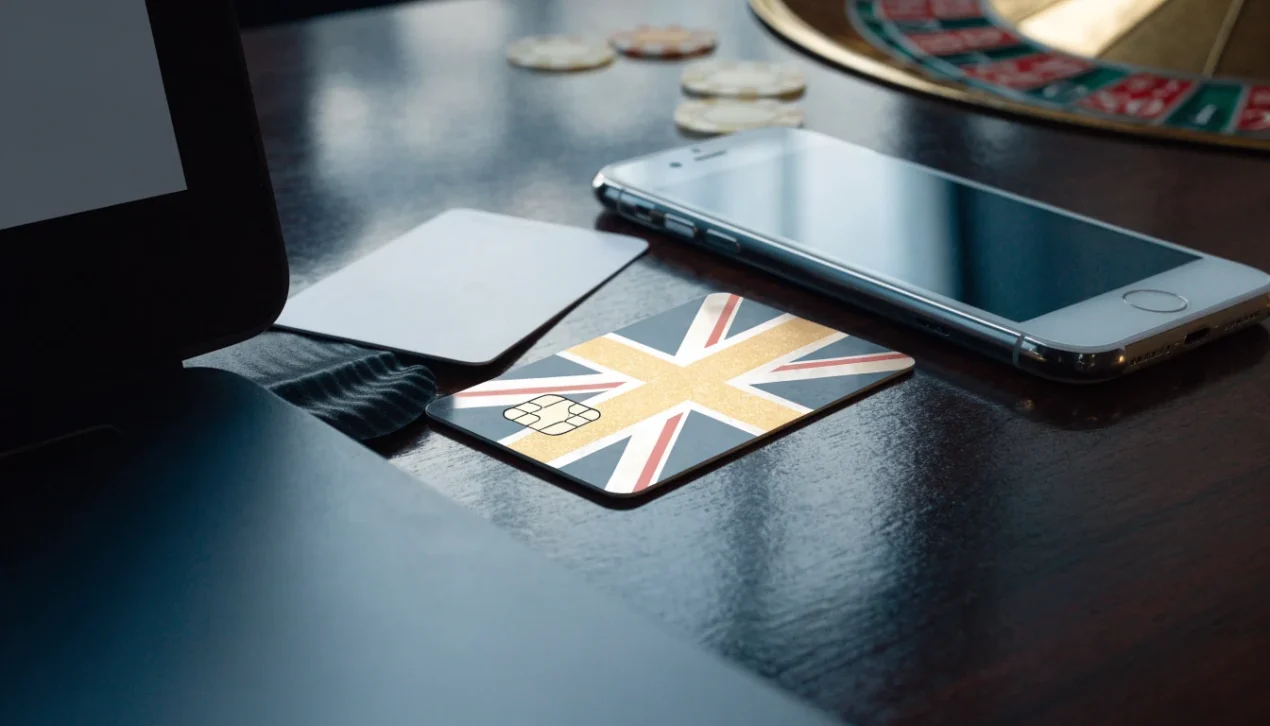
UK-licensed casinos may accept debit cards, but credit cards are not valid for gambling deposits, even when both carry the same network logo.
Can You Use a Credit Card to Gamble Online in the UK?
No. A UK-licensed online casino cannot accept credit-card payments for gambling, so you cannot use a credit card to fund a casino account at one of these sites. This applies whether you want to play table games, place a casino bet or make a deposit for online slots. If a site is licensed to serve customers in the UK, a credit card is not a valid gambling deposit option there.
That can be confusing because the same card brand may appear in a casino’s payment information for a different kind of card. UK casinos commonly accept debit cards, including Visa and Mastercard. A Visa debit card and a Visa credit card may look similar and carry the same network logo, but they are different products. The logo alone does not tell you whether a payment will be accepted.
When you are ready to deposit, check the payment method shown in the casino’s cashier and make sure it matches the card in your hand. If the card is a credit card, selecting Visa or Mastercard does not turn it into a debit card: the casino cannot accept it for gambling. If it is a debit card, it may be usable, subject to the options displayed by that particular casino and the card’s eligibility. A general list of card brands is not a guarantee that every card bearing that logo will work.
Casino sites that accept Jeton in the UK: what to check
This distinction also answers the question of whether you can use a credit card at an online casino in the UK: not at a UK-licensed casino for gambling. Trying a credit card instead of a debit card is not a way around the restriction, and a failed credit-card deposit should not be treated as a cue to keep testing similar card details. Confirm the product type first.
If you already have a debit card, look for the debit-card option in the cashier rather than relying on a general mention of Visa or Mastercard elsewhere on the site. If the cashier does not clearly identify which card types it accepts, check the operator’s payment terms or contact its support team before submitting a payment. This avoids confusing a supported card network with a supported card product.
A credit card may still be used for ordinary purchases that are unrelated to gambling, but that does not make it an acceptable way to put money into a casino account. The relevant point is the purpose of the payment: UK-licensed casinos cannot take credit-card funds for gambling. Do not assume that changing the label on a payment, or choosing a card brand instead of a card type, changes that.
So, if you are asking whether you can deposit at an online casino with a credit card in the UK, the practical answer is no at a UK-licensed site. If you mean a debit card, that is different: UK casinos commonly accept debit cards, including Visa and Mastercard. Check the cashier for the exact card type supported before you proceed.
Why UK Casino Sites Do Not Accept Credit Cards
If you’re looking for UK casino sites that accept credit cards, check each site’s current payment options before depositing. The details available here cover payout speed only, so they don’t confirm credit card acceptance.
1. NightLuck
Payout speed: 1-3 business days
NightLuck lists a payout speed of 1–3 business days. This is the available payment detail, but it does not confirm whether you can deposit by credit card.
2. BeOnBet
Payout speed: 1-3 business days
BeOnBet lists a payout speed of 1–3 business days. This is the available payment detail, but it does not confirm whether you can deposit by credit card.
3. Britsino
Payout speed: 1-3 business days
Britsino lists a payout speed of 1–3 business days. This is the available payment detail, but it does not confirm whether you can deposit by credit card.
4. Zombillion
Payout speed: 1-3 business days
Zombillion lists a payout speed of 1–3 business days. This is the available payment detail, but it does not confirm whether you can deposit by credit card.
5. Revery Play
Payout speed: 1-3 business days
Revery Play lists a payout speed of 1–3 business days. This is the available payment detail, but it does not confirm whether you can deposit by credit card.
6. Dieselwin
Payout speed: 1-3 business days
Dieselwin lists a payout speed of 1–3 business days. This is the available payment detail, but it does not confirm whether you can deposit by credit card.
7. NightWin
Payout speed: 1-3 business days
NightWin lists a payout speed of 1–3 business days. This is the available payment detail, but it does not confirm whether you can deposit by credit card.
8. Chanze
Payout speed: 1-3 business days
Chanze lists a payout speed of 1–3 business days. This is the available payment detail, but it does not confirm whether you can deposit by credit card.
9. x3bet
Payout speed: 1-3 business days
x3bet lists a payout speed of 1–3 business days. This is the available payment detail, but it does not confirm whether you can deposit by credit card.
10. EvoSpin
Payout speed: 1-3 business days
EvoSpin lists a payout speed of 1–3 business days. This is the available payment detail, but it does not confirm whether you can deposit by credit card.
The restriction on credit-card gambling in the UK is a regulatory rule, not simply a payment preference adopted by individual casinos. The regulator introduced the ban on 14 April 2020. It has not since been relaxed, so the date marks a continuing change in the rules rather than a temporary measure.
That history matters because a casino’s payment options can otherwise look like a decision made at the operator’s discretion. A site may update its cashier or change which payment services it supports, but it cannot choose to accept credit-card payments for gambling if the rule prohibits them. The restriction is not something a customer can bypass by asking the operator to process a card manually.
The change also does not mean that credit cards ceased to exist as ordinary financial products or that they cannot be used for unrelated purchases. It concerns using credit-card funds for gambling. The relevant distinction is the purpose of the payment, not whether the card is active or has available credit.
Regulatory Ban
UK-licensed online casinos are prohibited from accepting credit-card payments for gambling. This is a regulatory rule that cannot be bypassed.
For UK consumers, the ban is part of the rules governing regulated gambling. Remote gambling licensees serving the British market must operate within the applicable regulatory framework, even if the business itself is based elsewhere. A casino’s location or branding therefore does not, by itself, make the UK restriction optional for an operator serving that market.
The rule has remained in force since its introduction. There has been no later relaxation that would allow a UK-licensed casino to reintroduce credit-card gambling as a special feature, a limited-time offer or an exception for particular customers. If a site appears to advertise that option, the claim should not be treated as proof that the UK rules have changed.
This is why older references to credit-card deposits can be misleading. Payment pages, promotional material and third-party descriptions may not reflect the current regulatory position. A page can remain online after the rules or the operator’s arrangements have changed; its presence is not evidence that credit-card gambling is permitted.
The ban’s history is straightforward: the regulator brought it in on 14 April 2020, and it remains in force. For the question of whether the restriction still applies, the key point is not what a cashier once displayed or what a site claims to support, but the rule that governs gambling payments in the UK.
Casino Sites That Accept EcoPayz in the UK
What to Expect from Casino Payment Methods
The phrase “casino sites that accept credit cards” can be misleading in the UK. A payment-method page may display familiar card-network names, but that does not mean you can use a credit card to fund gambling. UK-licensed casinos cannot accept credit-card payments for gambling. Debit cards are a separate option: UK casinos commonly accept them, including Visa and Mastercard.
That distinction matters because Visa and Mastercard are networks, not a guarantee that every card bearing their logos will work. A card’s product type and the casino’s current payment arrangements affect whether it is eligible. Check the cashier—the payment area within your account—before relying on a method. The logos shown on a general information page may not reflect what is available to you at the point of deposit.
A specialist review may list Visa and Mastercard among a casino’s payment methods, but that listing is not confirmation that every card product is accepted in the UK. Treat it as a prompt to check the operator’s own cashier, not as proof that a credit card can be used. If the cashier presents a card option, confirm that it is a debit-card route and that the specific card you intend to use is eligible.
Payment choices can also differ between operators and may change. A method appearing at one casino need not appear at another, and a payment route described elsewhere may not be available for your account. The cashier is the practical place to check what the site currently accepts. If you are unsure whether a card is a debit or credit product, check with the card provider rather than testing it through a gambling transaction.
Visa and Mastercard are payment networks; this does not mean every card bearing their logos is accepted, as the product type (debit vs. credit) determines eligibility.
For the same reason, a list of card brands is not a complete guide to payment access. It may describe the network supported by a site without spelling out which card products qualify. Reading the payment terms and the information displayed in the cashier helps you distinguish a supported network from an accepted payment method. Do not assume that a card will be treated as debit simply because it carries a familiar logo.
The useful starting point is therefore not whether a casino displays a card logo, but what kind of card you hold and what the cashier permits. Debit cards are commonly accepted; credit cards are not an available gambling deposit route at UK-licensed casinos. If the information is unclear, contact the operator before making a payment. This avoids confusing a network name with permission to use every card connected to it.
When comparing payment information, look for clear wording about the card type rather than relying on a broad claim that a site accepts cards. A current cashier check is more relevant than a general list because it shows the options presented by that operator at the time you use the account. Even then, the displayed method must match your actual card product. Familiar branding alone cannot settle that question.
Choosing a Payment Route for Casino Deposits
A useful payment method is not simply one that appears on a casino’s list. It must be available to you, work with the account you intend to use and fit the amount you want to deposit. The cashier is the place to check: payment options and conditions can differ between sites and may change.
Casinos that accept Wirecard in the UK: what to check
Debit cards are a familiar route at UK casinos, with Visa and Mastercard commonly accepted. That does not mean every card product will work at every cashier. Check that the method shown is a debit-card option and confirm that your particular card is eligible before proceeding. A credit card is not a permissible route for gambling deposits at a UK-licensed casino.
Bank transfers and open banking services offer another way to move money from a bank account. A specialist review describes open banking and bank transfers as capable of providing instant deposits at many sites, but that is not a guarantee for a particular casino or bank. Look at the cashier’s stated processing information and any conditions attached to the transfer before choosing it.
Some UKGC-licensed casinos also accept Apple Pay for deposits. Availability depends on the operator and the payment setup supported by your device and card, so its presence elsewhere is no assurance that it will appear in your own cashier. PayPal, Skrill and Neteller may be offered by some sites too; a specialist review identifies Skrill as a commonly used deposit method at UK-friendly casinos, but the live cashier is more useful than a general market description when you need to know what you can use.
Prepaid vouchers work differently. Paysafecard is deposit-only, so do not choose it on the assumption that the same route will also handle a payout. That distinction matters if you want to avoid having to arrange another method later. Some sites may list other payment services, but a name on a payment page does not by itself tell you whether the service is available to your account or how it can be used.
Do
- Check the cashier for specific debit-card options
- Verify minimum and maximum deposit limits
- Confirm the account currency and potential fees
Don’t
- Assume a card is accepted based on a network logo
- Rely on general market estimates for deposit limits
- Use a payment method without checking its payout support
The minimum deposit can depend on the selected method. A specialist review gives a typical starting range of £10–£20, but treat that as a guide rather than a promise: check the minimum displayed for the option you select. The amount may differ across payment routes, and the cashier’s current terms take precedence over a general estimate.
Maximum deposits can also be set at different levels per transaction, per day or per month. Those ceilings may vary by payment method and account status. Before submitting a payment, check the limit relevant to the route and the time period shown; a transaction may be declined if it exceeds the applicable cap. Where you have set an account-level financial limit, keep that control in view as well: the amount the cashier allows is not a reason to deposit more than you intend.
Finally, check the account currency and any charges before confirming. A payment route can involve costs beyond a visible casino fee, including charges from a provider or bank and currency-conversion costs. The practical choice is the method whose availability, minimum, maximum and costs you have checked for your own account—not the one with the most familiar name.
Deposits and Withdrawals: What Happens to Your Money
A deposit and a withdrawal are two parts of the same transaction, but they do not necessarily move at the same speed or through identical steps. The route you use to put money into an account can affect how a casino returns funds later. For UK players, the key point is that anti-money laundering rules usually require a payout to go back to the original payment source.
Casinos That Accept Citadel UK: How to Check
This is known as a closed-loop approach: money should return through the route it came in on, where that route can receive withdrawals. It helps casinos check the movement of funds and reduce fraud. It also means you should not assume that a method shown for deposits will automatically be available for withdrawals. Some payment options are deposit-only, while others can support both directions; the cashier’s terms determine what applies.
Why a withdrawal can take longer
A deposit may appear in your casino balance quickly, but a payout involves more than sending a payment instruction. The casino has to review and approve the withdrawal before the payment provider or bank processes it. Those are separate stages, and the total wait depends partly on the operator’s internal approval and whether your account has completed KYC, or identity verification.
The first withdrawal can take longer if verification is still outstanding. The casino may need to confirm your identity or check that the payment source belongs to you before approving the transaction. If a request is held for a review, the delay may occur before the money has even been sent to the payment provider. Once approved, the provider’s own processing also affects when the funds arrive.
Attention: A fast deposit does not guarantee a fast withdrawal, as payouts require operator approval and identity verification.
A specialist review reports that a card deposit can be instant while a payout takes several business days. That is a useful illustration of why a fast deposit does not establish how quickly a withdrawal will reach you; it is not a timetable that applies to every casino or payment route. Check the cashier’s stated processing information and any account messages rather than treating the deposit speed as a promise about cashing out.
When the original route cannot receive a payout
A payment route may not accept withdrawals, or it may no longer be available when you request one. In that case, the casino may ask you to use another method and provide additional information or verification. The alternative is not necessarily a matter of preference: the operator still has to satisfy its checks on the source and destination of funds.
Before depositing, look at the withdrawal terms as well as the deposit options. Confirm whether the method supports payouts, whether the account currency matches the one you intend to use, and whether any fees apply. If the casino’s cashier does not explain what happens when a deposit route cannot receive a payout, ask the operator before sending money. Finding out only after a win is an avoidable complication.
For credit-card searches, there is an important limit to this comparison: UK-licensed casinos cannot accept credit-card payments for gambling. A credit card is therefore not a deposit route whose withdrawal process you can compare at a UK-licensed casino. Debit cards and other permitted methods may have different deposit and payout arrangements, which still need to be checked individually.
Keep a record of the method used and the status of any withdrawal request. If a payout is pending, distinguish between casino approval and payment-provider processing when contacting support; they are different stages and can have different explanations. The route that looks quickest when depositing may not be the route that gets money back to you fastest.
Credit Cards, Online Casinos and the UK Rules
The restriction on credit-card payments for gambling applies to online casino transactions, not just to payments made directly with a card. Remote gambling licensees serving Great Britain must not accept credit-card funds for gambling, including when the money reaches the casino through an intermediary.
That distinction matters because a payment can be routed through a money service business or a digital wallet rather than entered into the casino cashier as a card payment. Changing the route does not make credit-card funding acceptable. If a service passes credit-card funds on for gambling, the remote gambling licensee must not accept them for that purpose.
Wallets are not all treated as interchangeable. A wallet funded from a permitted source is different from one that allows a customer to use credit-card funds for gambling. A casino cannot accept a wallet payment where the wallet permits those funds to be used for gambling. The restriction therefore concerns the origin and permitted use of the money, not only the payment label shown on a deposit screen.
This is relevant when a payment service lets you hold money from several sources. A balance in a wallet does not, by itself, establish that the funds can be used for casino gambling. The service’s rules and the casino’s payment controls matter. If credit-card funds are available for gambling through that wallet, the route falls within the restriction; an intermediary cannot be used to sidestep it.
Indirect Funding
Using an intermediary, such as a digital wallet or money service business, does not make credit-card funding acceptable. Remote gambling licensees must still prevent the use of credit-card funds for gambling transactions.
For a player looking at an online casino, the practical point is not to assume that an indirect route is permitted simply because the cashier accepts a wallet or payment service. Remote gambling licensees have to prevent prohibited credit-card funding, including funding routed through a money service business. The same principle applies if the payment is presented as a transfer from an intermediary rather than as a card transaction.
The UK regulator introduced the ban on 14 April 2020, and it has not been relaxed. The rule is part of the framework for remote gambling licensees, so a site’s willingness to process a payment would not make credit-card gambling compliant. Nor does a different payment interface change the underlying source of the funds.
If you are unsure whether a proposed route involves credit-card money, check the payment provider’s terms and the casino’s cashier information before trying to deposit. A method being visible as an option is not, on its own, proof that every way of funding it is allowed for gambling.
Credit Cards and Casinos Not on GamStop
A casino described as “not on GamStop” may sound like a way to find online gambling with a credit card. That description does not establish whether a site accepts credit-card payments for gambling, or whether it is authorised to serve customers in Great Britain. The two questions should not be treated as interchangeable.
The UK restriction applies to credit-card gambling at UK Gambling Commission-licensed casinos. Calling a site “not on GamStop” does not create an exception: the regulator’s ban, introduced on 14 April 2020, has not been relaxed. A site operating under a UKGC licence cannot make credit-card deposits available for gambling simply because it is outside a particular scheme.
The label itself is not evidence of a payment policy or a licence. It may appear in descriptions of sites, but it cannot confirm what the cashier currently accepts, who regulates the operator, or what protections apply to a UK customer. Nor does a page claiming that a casino accepts cards tell you whether “card” means a credit card or a debit card. Those are different payment products, and the distinction matters.
For customers in Great Britain, remote gambling businesses selling into the market must hold the relevant UK Gambling Commission licence, wherever the business is based. A site located overseas does not avoid that requirement by being accessible from the UK. Online gambling is legal in the UK only through licensed and regulated sites; an offshore operator outside the UKGC system is not a UK-licensed casino. The availability of a website should not be mistaken for approval to offer gambling here.
If a site advertises credit-card deposits alongside a “not on GamStop” claim, do not assume that this proves the UK rules have changed or that the site is a suitable alternative. Check the operator’s regulatory status through the UKGC public register, and do not deposit unless its current licence can be verified. A claim on the site itself is not a substitute for that check.
Attention: A site described as "not on GamStop" is not a guarantee of legality or the ability to use credit cards; always verify the operator’s UKGC licence.
The practical answer is therefore narrower than the label suggests: there is no UK-licensed casino route to credit-card gambling created by choosing a site described as not on GamStop. The wording may invite you to focus on the scheme, but it does not alter the credit-card restriction. Treat any promise of a credit-card casino as a reason to check the operator carefully, not as confirmation that credit-card gambling is permitted for UK customers.
Are Credit Cards Allowed for Gambling in the UK?
No. Credit-card payments for gambling are not allowed at UK-licensed online casinos. The restriction applies to the operator: a remote gambling licensee must not accept credit-card funds for a gambling transaction. It is therefore not a matter of whether a particular casino chooses to list credit cards in its cashier. A UK-licensed site cannot offer them as a permitted way to fund gambling.
The Gambling Commission brought the restriction into force on 14 April 2020. It remains in place; it has not since been relaxed. That date is the key point if you are checking whether older information about casino payments still applies. A payment route described as available before the rule took effect should not be taken as evidence that a licensed UK casino can accept credit-card funds now.
The restriction concerns the source of money used for gambling, not just the label shown on a payment screen. Operators cannot accept credit-card payments routed through a money service business, or wallet payments where the wallet permits credit-card funds to be used for gambling. Changing the route does not make a prohibited credit-card-funded gambling payment acceptable.
This is a restriction on operators, rather than a general criminal offence imposed on a player for attempting to gamble with a credit card. For online gambling to be legal in the UK, the casino must hold the relevant UK Gambling Commission operating licence. Remote gambling licensees serving Great Britain consumers are required to hold that licence, regardless of where the operator is based. An offshore site’s payment terms do not change the rules applying to a UK-licensed casino, and an offshore licence is not a UKGC licence.
So, if the question is whether credit cards are legally accepted for gambling at UK online casinos, the answer is no. The rule began on 14 April 2020 and is still in force. Claims that a UK-licensed casino can take credit-card deposits, or that a wallet makes such a deposit permissible, conflict with the restriction. A site’s own description of its payment options does not override the regulatory requirement.
Keeping Casino Payments Consistent and Secure
When you open a gambling account, make sure its personal details match the name on the payment account you intend to use. If the casino cannot readily establish that both belong to you, a transaction may face avoidable checks or delay. Matching ownership details helps reduce that friction and supports the operator’s efforts to prevent fraud.
The same principle applies when you choose how to move money in and out. Where the cashier allows it, using one account in your own name consistently for deposits and withdrawals can make the transaction trail easier to follow. This is a practical preference, not a promise that every payment method will work for both directions or that a casino will never ask for further information.
Secure Payment Setup
- Ensure personal details match the name on the payment account
- Use a payment route registered in your own name
- Verify the method supports both deposits and withdrawals
- Check for any account-level financial limits
Avoid depositing from a relative’s or friend’s account, even with their permission. The payment may not be treated as yours, and the operator may need to resolve the mismatch before processing it. Using someone else’s details can also complicate questions about who owns the gambling account and the funds. Keep your account information accurate and use a payment route registered to you.
Before confirming a payment, check the casino’s cashier and terms for any restrictions on the account or method. A route listed for deposits may not be available for withdrawals, and the casino may require a different route if the original one cannot receive funds. If you need to change a payment account, check the process with the operator rather than trying several accounts in other people’s names.
Searches for credit card casinos in the UK do not change the payment rules: UK-licensed casinos cannot accept credit-card payments for gambling. Consistency means using a permitted payment route that belongs to you, not trying to make a credit card work by passing funds through another person or account.
Keep records of the payment account you use and any confirmations from the cashier. If a transaction is questioned, accurate details and a clear record can help you explain what happened. Basic care with ownership and consistency cannot remove every check, but it can avoid problems caused simply by mismatched names or changing accounts without checking first.
Can You Play Online Slots with a Credit Card?
No. You cannot fund online slot play with a credit card at a UK-licensed casino. The restriction applies to gambling deposits, including money intended for slots; choosing a different game within the same site does not change the payment rule. The regulator introduced the ban on 14 April 2020, and it remains in force.
That leaves a distinction worth keeping clear: a casino may offer other ways to pay, but a credit card is not an acceptable route for slot deposits. Check the site’s cashier for the methods it currently supports, and read the terms attached to the method before sending money. Do not assume that a payment option available for one purpose can be used for another.
The rules also set conditions for how online slots are played in Britain. Operators must verify your age before allowing you to deposit into a gambling account. A legal online casino serving customers in Great Britain must hold the relevant UK Gambling Commission licence; a familiar-looking site or a payment logo does not establish that status.
There are limits on the amount that can be staked in a single online slot game cycle. For customers aged 25 and over, the maximum is £5. For those aged 18 to 24, it is £2. The £5 limit for all adults took effect on 9 April 2025, while the lower limit continues to apply to younger adults. These are stake limits, not recommended spending levels.
Slot mechanics are restricted too. Each spin must last at least 2.5 seconds, and autoplay is not permitted in Britain. A site offering a faster spin or automatic play is therefore not simply providing a different preference setting: those features conflict with the rules for online slots.
If you are considering a deposit, separate the questions. First, confirm that the casino is licensed for the British market and that you meet its age requirements. Then select an available non-credit-card method and check its conditions in the cashier. Finally, keep the slot stake and your overall spending within limits you can afford. The absence of a credit-card option is not a technical glitch to work around; it is part of the rules governing gambling payments.
Why must withdrawals return to the deposit method?
Returning funds to the original payment source is a common anti-fraud and anti-money-laundering control. Using the same named account for deposits and withdrawals can also reduce avoidable ownership checks.
What is the fastest withdrawal method for UK casinos?
PayPal, open banking services and debit cards linked to fast payout systems are generally among the quickest options. The casino’s approval process and whether your account is verified also affect how soon you receive the money.
Which method has the lowest fees?
There is no universally lowest-fee method. Compare the casino’s charges, provider or bank fees, currency-conversion spread and any network costs for the amount you plan to transfer.
Is Skrill available?
Yes, Skrill is available at some UK-friendly casino sites and remains a common deposit option. It may be excluded from promotions.
Do UK casino withdrawals require verification?
Verification may be needed before a withdrawal is approved, particularly for a first withdrawal. Completing it in advance can help avoid delays.
Why can a fast payout casino still delay my withdrawal?
A fast payment method does not skip the casino’s internal approval process. A first withdrawal may take longer while verification is completed, and the account must be fully verified for processing to proceed smoothly.
Are fast casino withdrawals guaranteed?
No. Withdrawal speed depends on the casino’s approval process and whether your account is fully verified; bank transfers can also be affected by cut-off times and weekends.
Related posts

Top Rated Online Casinos UK and Amatic Games

Progressive Slots Online UK: Jackpots and Odds