Voodoo Casino Account Registration and Verification
 Available in GB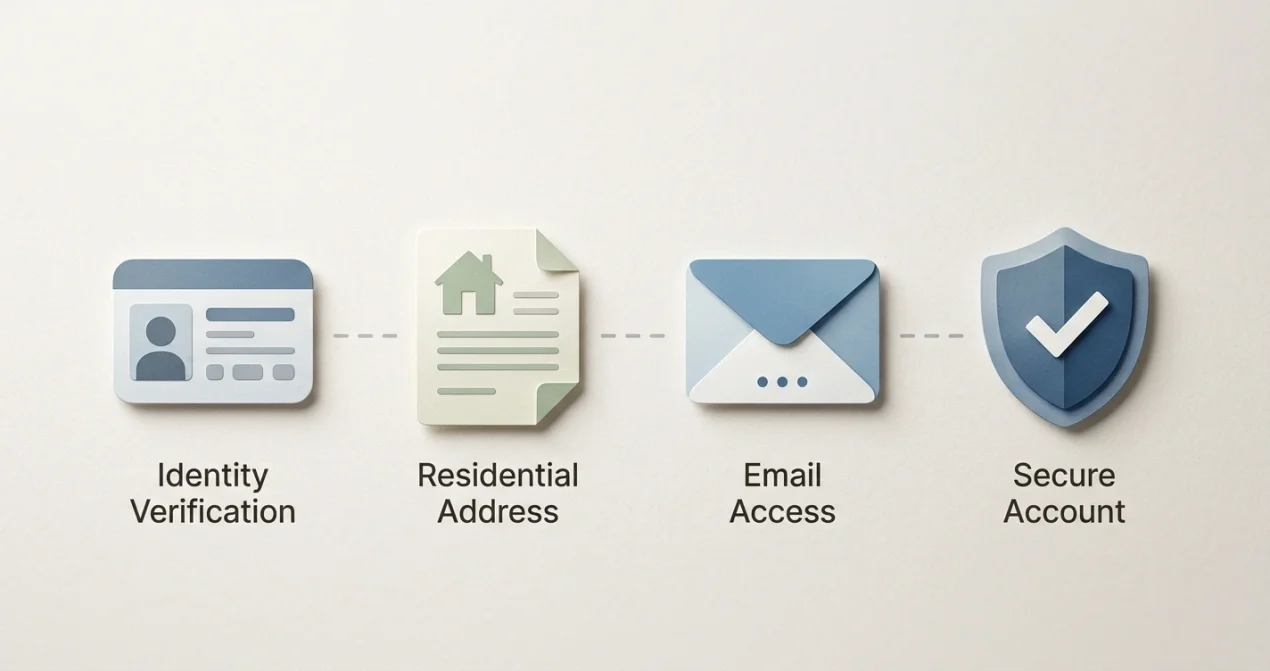
Content
Voodoo’s current KYC policy says registration involves personal identity and contact information, including date of birth, name, residential address, valid email and identity evidence. The operator may request additional documents and checks. However, UK readers should not treat that global registration process as proof that a Great Britain account can currently be opened.
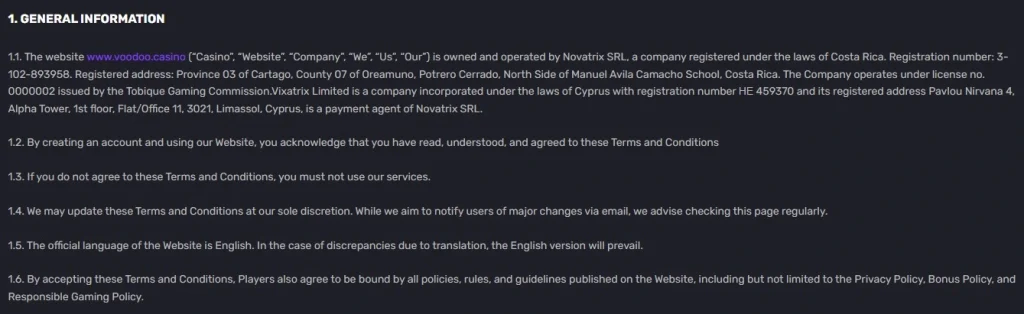
Voodoo’s current terms list the United Kingdom among countries prohibited from using the casino for real-money play. Because of that direct restriction, this guide does not invent a UK country-selector flow or give instructions for bypassing location controls. Instead, it explains what the published account and verification process requires in general, how it differs from UKGC rules for locally licensed operators, and what to prepare before any legitimate registration attempt in an eligible jurisdiction.
Before registration
Account creation starts with eligibility, not the form
Registration advice is often written as a sequence of clicks, but the first question is whether the user is eligible to create and use an account. Voodoo’s terms say users must be at least 18 or the higher legal gambling age in their jurisdiction and must be in a jurisdiction where use of the service is permitted. The same terms explicitly place the United Kingdom on the restricted-country list for real-money play.
That makes the UK case straightforward from an editorial perspective: this page should not direct a UK resident through sign-up as though access were confirmed. It also should not suggest a VPN or another workaround. Voodoo’s terms prohibit using a VPN to bypass geographic restrictions and state that restriction breaches can affect withdrawals or account status.
If you are reading from an eligible jurisdiction, the account process still depends on identity and contact information. The sections below explain the published requirements so you can understand what registration and later verification involve without assuming that every country sees the same live form.
Registration data
Voodoo’s KYC policy identifies the core information behind an account
Voodoo’s official KYC page states that a person must register personally and submit an application to become an account holder. It identifies date of birth, first and last name, full residential address and valid email address as core information. It also says identity documentation must show that the user is over 18 or above the applicable age of majority in their jurisdiction.
| Information or evidence | Published Voodoo requirement | Why it matters |
|---|---|---|
| Date of birth | Required with valid identification showing the applicable legal age | Age and identity verification |
| First and last name | Listed as registration information | Account ownership and identity matching |
| Residential address | Full residential address is listed | Identity and jurisdiction checks |
| Email address | A valid email address is listed | Account communication and contact verification |
| Identity document | Valid passport or other identification paper is listed | Evidence that the account holder is the person claimed |
| Proof of address | Explicitly listed | Confirms residential details |
The operator also reserves the right to request additional documentation and additional checks. That means the published list is a baseline rather than a promise that every account will complete verification with exactly the same documents.
Registration vs KYC
Opening an account and proving the account holder’s identity are separate tasks
Registration creates the account record: personal details, contact information, credentials and agreement to the site’s rules. Verification tests whether those details belong to a real person and whether the evidence is sufficient for the operator’s checks. The two steps can happen close together, but they solve different problems.
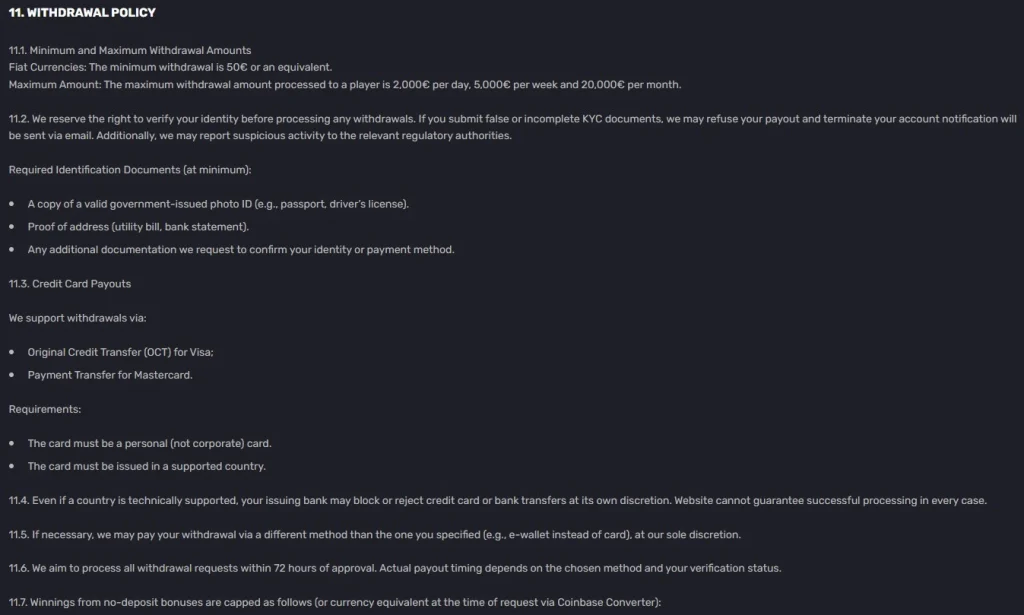
Voodoo’s KYC policy makes that distinction visible by saying the company may regularly conduct checks to verify identity and contact information. Its terms also say identity may be checked before withdrawals are processed. A user should therefore prepare for verification before treating the account as friction-free, especially if they intend to deposit and later withdraw.
The dedicated Voodoo Casino KYC covers document requirements and timing in more detail. This parent page stays focused on what someone should understand before creating an account.
UK benchmark
UKGC-licensed remote operators must verify core identity before gambling
The Gambling Commission’s current licence condition 17 requires UKGC-licensed remote operators to obtain and verify information establishing a customer’s identity before that customer is permitted to gamble. The minimum information includes name, address and date of birth. The Commission reiterated that requirement in August 2026 and also warned that information which could reasonably have been requested earlier should not first be demanded as a condition of withdrawal.
This is useful context for UK readers because it shows how the locally regulated market is meant to work. It is not evidence that Voodoo is licensed by the UKGC. The Voodoo trust and safety and licence page explain that local-authorisation question separately.
The practical lesson is broader than any one operator: if an online casino serving Great Britain is UKGC-licensed, identity checks should not be treated as a surprise introduced only after a player asks for money back. The user should be told what information may be needed, and core identity verification occurs before gambling.
Payments connection
Accurate account details reduce friction when deposits and withdrawals are reviewed
Account information, KYC evidence and payment ownership are connected. A mismatch between the name or address on an account and the evidence supplied later can trigger additional checks. Voodoo’s terms expressly allow identity verification before withdrawals and warn that false or incomplete KYC documents can lead to a refused withdrawal or account closure.
That is why account setup should be treated as part of the payment process rather than a disposable sign-up step. Use real, consistent details and avoid creating duplicate accounts. Voodoo’s bonus terms also restrict multiple-account behaviour, so trying to create a second profile can create both account and promotional problems.
The Voodoo Casino payments explains the cashier framework, while the withdrawal page covers published limits and processing expectations. Neither should be read as proof of UK cashier eligibility because the current restricted-country clause remains controlling for Great Britain access.
Mobile registration
A mobile browser can support account tasks without proving a UK app or UK sign-up route
Voodoo’s site is accessible through a mobile browser and the account experience can be designed for phone use, but that should not be stretched into claims that an official UK App Store or Google Play app has been verified. The Voodoo Casino mobile keeps browser access separate from app-store availability.
The same distinction applies to registration. A visible register button or form on a public site does not override the operator’s jurisdiction rules. For a UK reader, the current terms naming the United Kingdom as restricted are more probative than the existence of a generic sign-up interface intended for multiple markets.
If an eligible user registers on mobile, the practical requirements remain the same: accurate personal details, access to the registered email and the ability to supply readable identity and address evidence when requested.
Security basics
Account control depends on credentials as well as verification
KYC proves who is behind an account, but day-to-day account security still depends on basic user controls. Use a unique password, protect the email address connected to the account and do not share login details. If an operator offers additional authentication or security controls in the live account interface, enable them rather than relying only on a password.
Be equally cautious with unsolicited messages. A request for documents should be checked against the operator’s real site and support channels before files are uploaded. Identity documents and proof-of-address files are sensitive, so sending them to an unverified address or through a copied link creates a separate fraud risk.
For broader operator-level checks, including licensing, support and safer-gambling tools, use the Voodoo trust and safety guide rather than treating successful registration as proof that every regulatory question has been answered.
Decision path
What to prepare before opening a Voodoo Casino account
Prepare accurate legal-name, date-of-birth, residential-address and email details, plus current identity and address evidence. Expect that additional checks may be requested and understand that verification can affect later withdrawals. Those points come directly from Voodoo’s published KYC and account terms.
For a UK reader, however, the first preparation step is not gathering documents. It is recognising the current access restriction. Voodoo’s terms list the United Kingdom among countries prohibited from real-money play, so this guide does not recommend attempting to register from Great Britain or bypassing geographic controls. If that policy changes in future, the live registration flow and local licensing position should be rechecked before any account action.
Readers comparing the broader product can return to the Voodoo Casino UK review. The account page is deliberately narrower: it explains the information and verification logic behind registration without pretending that a global account form equals confirmed UK availability.
This material was created by the Voodoo Casino UK Guide team.
Related posts

Voodoo Casino Reputation and Complaints: What the Evidence Shows
Voodoo Casino Licence and UKGC Status Explained